Elyla24th Bienal de Arte Paiz
El árbol del mundo - Chontalli aquí, chontalli allá06.11.2025 - 15.02.2026
Bienal de Arte Paiz
Since its founding in 1978, the Paiz Art Biennial has been Central America’s premier contemporary art event, ranking as the world’s sixth-oldest and Latin America’s second-oldest Biennial.
Its 24th edition, “The World Tree”, draws inspiration from the archetype of the “Tree of Life”, central to numerous ancient cosmogonies, including the Mayan tradition, where it connects different layers of existence, bridging the physical, spiritual, and speculative realms.
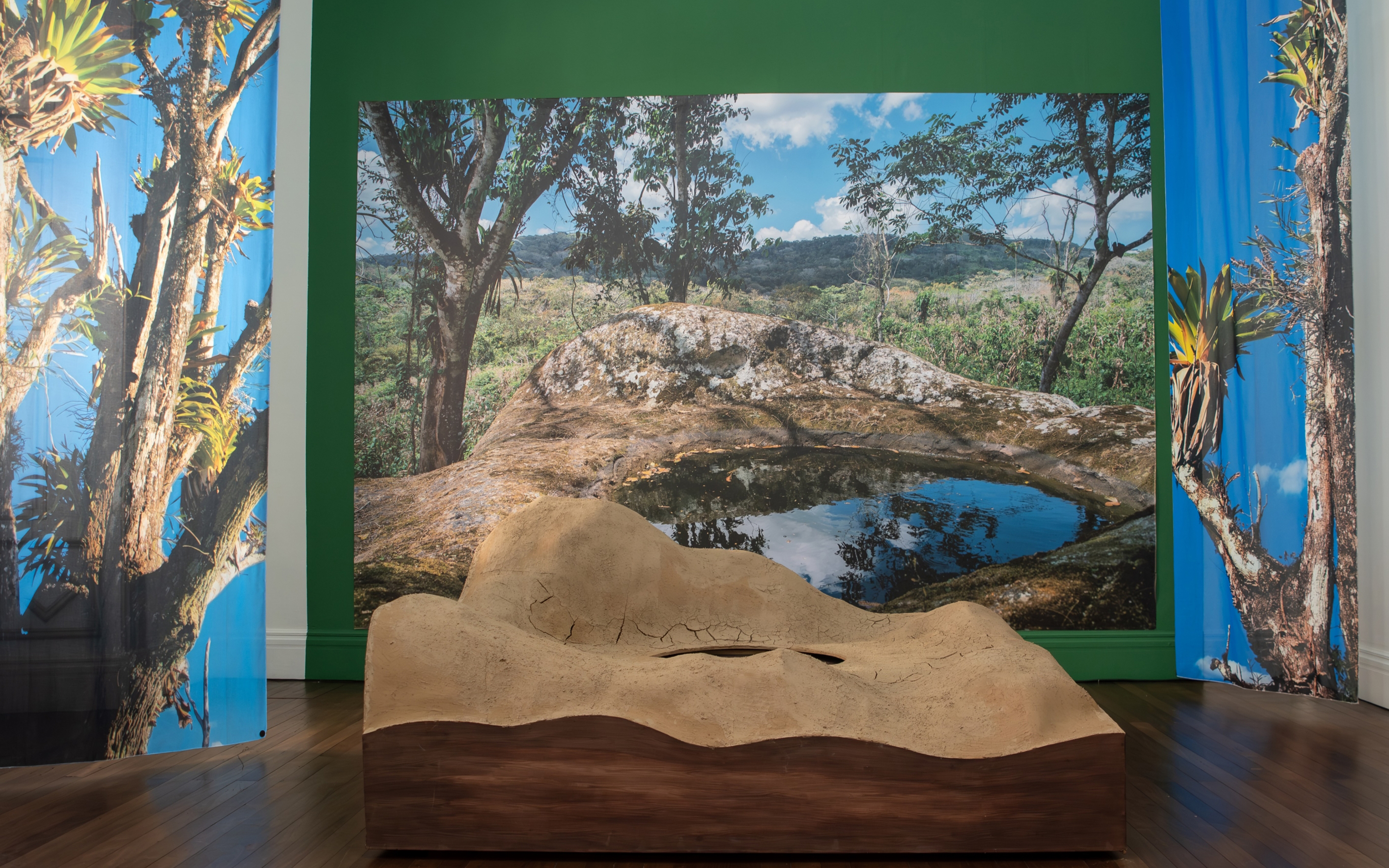
“Chontalli aquí, chontalli allá” situates Elyla’s practice within an urgent gesture: activating ancestral memories silenced by colonial history through embodied experience, expanding the horizons of fields such as history and archeology. Here, art does not illustrate; it orients open method of territory and summons forms of knowledge that grow from the body, spirituality and relationships with land.
From a Chantal and sex-dissident perspective, the artist reacrticulates the term Chontalli – “foreigner” in Nahuatl – transforming it into living root and collective horizon. Through ritual, sculpture, archival practices, and community collaboration, she reactivates the archeological site of Piedras Pintadas, in Villa Sandino, her birthplace, as a ceremonial space and memory portal: not a remnant, but a body that remembers, sings and blooms.
This project proposes an artistic methodology that can precede and guide academic frameworks. Resonating with this process are historian Dr. Victoria González Rivera, archeologist Dr. Rigoberto Navarro Genie, and Professor Roselia Vázquez, Tsome (Chontal) speaker and activist, land defender of the Sierra –Contal Alta– from the Isthmus of Tehuantepec, Oaxaca, Mexico.
This amatory and pedagogical repository, along with the sculptures, images and ceremonial actions that surround it, forms a living counter-archive: a practice that does not simply revisit the past, but creates conditions for its future rewriting, inviting us to listen to what bodies, stones and communities have always known.
Read moreExhibition Views


